Reviewing the Bluebird on Branch Redwork Design
As a designer who has spent countless hours staring at digitized files and watching needles punch through fabric, I have developed a keen eye for what makes a machine embroidery design truly viable for commercial use. It is not just about how pretty it looks on a screen; it is about how it behaves under tension, how it reads from a distance, and whether it adds value to the final product. Recently, I evaluated the Bluebird on Branch Redwork Embroidery file to determine its potential for my current lineup of handmade goods. Here is my practical assessment of this design for real-world application.
First Impressions and Visual Personality
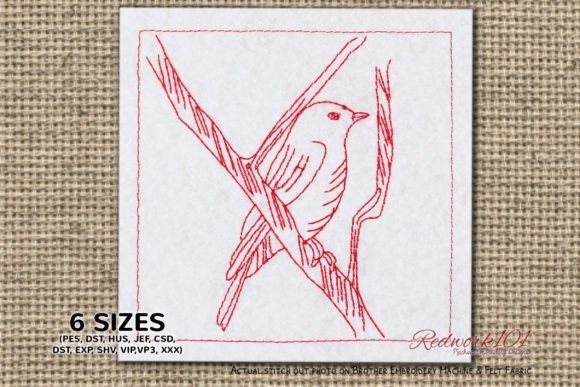
The immediate appeal of the Bluebird on Branch Redwork Embroidery lies in its simplicity. In an era where overly complex, dense designs can overwhelm delicate fabrics, this piece offers a breath of fresh air. The redwork style—traditionally executed with a single color thread using primarily running stitches or simple satin accents—creates a vintage, nostalgic mood. It feels organic and timeless, which is exactly what many customers are seeking when they browse for unique, handcrafted items.
The silhouette of the bird is clean, avoiding unnecessary internal detailing that might get lost or cause thread breaks on smaller scales. The branch provides a natural anchor, giving the composition balance without making it feel heavy. For those of us in the craft business, this visual clarity is crucial. It ensures that the design remains recognizable even when scaled down for smaller items like baby clothes or pocket patches.
Real-World Application: From Totes to Nursery Decor
To test the versatility of this embroidery file, I imagined several specific projects where it could shine. My primary test case was a custom canvas tote bag. Canvas is a sturdy, textured fabric that can sometimes chew up delicate designs, but the bold lines of this bluebird held up beautifully. The contrast between the traditional redwork thread and the natural beige of the canvas created a rustic, artisanal look that appeals to eco-conscious buyers.
Beyond totes, I considered this design for sweatshirt embroidery. Placed on the left chest area, the bird acts as a subtle brand marker or a personalized touch for a boutique clothing line. Because the design is not overly dense, it does not create a stiff, uncomfortable patch on the garment. This is a significant advantage for custom apparel, where comfort is just as important as aesthetics.
For baby embroidery projects, such as onesies or burp cloths, the simplicity of the design is a major benefit. Babies require frequent washing, and less dense stitching means less puckering and better durability over time. The whimsical nature of a bird on a branch fits perfectly into nursery themes, offering a gentle, calming visual element for parents decorating a child’s space.
Technical Considerations and Stitching Performance
When working with any digital embroidery file, understanding the stitch structure is vital. Since this is marketed as a redwork design, you can expect a predominance of running stitches. These are excellent for speed and minimizing thread consumption, but they require precise tension settings. If your machine’s tension is off, running stitches can look loose or messy. I recommend testing the design on scrap fabric first to dial in your machine’s performance.
The product description notes that the box stitch shown in promotional images is optional. This is a thoughtful inclusion. Removing the box allows for greater flexibility in placement, especially on curved surfaces like caps or rounded pillow covers. However, if you choose to include the box, ensure your hoop size is adequate to capture the entire frame without hitting the hoop edges, which can cause needle strikes.
One critical factor to consider is stitch density. While redwork is generally low-density, you must still use an appropriate stabilizer. For stretchy fabrics like jersey knits used in t-shirts, a cut-away stabilizer is essential to prevent distortion. For woven fabrics like linen or cotton used in home decor, a tear-away stabilizer usually suffices. Always match your stabilizer choice to the fabric texture and weight.
Navigating Challenges: Fabric and Scale
While the Bluebird on Branch Redwork Embroidery is versatile, it is not without its limitations. On very dark fabrics, a traditional red thread might not provide enough contrast. In such cases, I advise experimenting with different thread colors. A bright white or metallic gold could offer a striking alternative while maintaining the single-color aesthetic. Always test your color choices on the actual fabric before committing to a production run.
Additionally, be cautious when scaling this design down too far. The fine lines of the branch and the bird’s features need minimum width to stitch out cleanly. If you attempt to shrink it below a certain threshold, the details may merge, resulting in a blob rather than a recognizable bird. Check the recommended minimum size provided by the digitizer, or conduct your own tests to find the breaking point.
For embroidered patch creation, this design works well if backed with a sturdy material. However, because redwork lacks the fill coverage of satin or fill stitches, the background fabric will show through. This is intentional and part of the charm, but it means the patch will not have the same opaque, solid appearance as a fully filled logo. Ensure this aesthetic aligns with your brand identity.
Commercial Value and Brand Consistency
For Etsy sellers and small shop owners, consistency is key to building trust. The Bluebird on Branch Redwork Embroidery offers a cohesive look that can be applied across various product lines, from kitchen towels to wall art. This consistency helps in creating a recognizable brand style. When customers see this distinctive bird motif, they begin to associate it with quality and craftsmanship.
Moreover, the simplicity of the design reduces production time, allowing for higher throughput during peak seasons like holidays. Whether you are creating holiday embroidery gifts or everyday personalized gifts, efficiency matters. A design that stitches out quickly and reliably minimizes waste and maximizes profit margins.
Final Designer Notes
Before integrating this design asset into your workflow, take a moment to review the licensing terms. Confirm whether the file permits commercial use for finished products or if there are restrictions on digital resale. It is always better to be safe than sorry when building a small shop product lineup.
In summary, the Bluebird on Branch Redwork Embroidery is a solid addition to any designer’s library. It balances aesthetic appeal with technical practicality, making it suitable for a wide range of embroidery projects. By paying attention to fabric choice, stabilizer selection, and thread contrast, you can leverage this design to create high-quality, marketable items that resonate with customers. It is a reminder that sometimes, less is indeed more in the world of commercial embroidery.